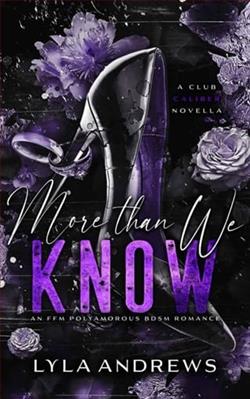
Lyla Andrews' novella, More Than We Know, is a compelling exploration of love, identity, and the complexities of modern relationships. Set against the vibrant backdrop of Chicago, the story delves into the lives of three individuals whose paths converge in unexpected ways, challenging conventional notions of romance and commitment.
The narrative is primarily driven by its three protagonists: Quentin, Sarah, and Kat. Each character is meticulously crafted, with Andrews providing a deep dive into their emotional landscapes. Quentin and Sarah, a married couple, find themselves at a crossroads. Their marriage, once filled with passion and adventure, has become stagnant, a common plight for many long-term relationships. Andrews captures this sense of inertia with a deft touch, making their struggles relatable and poignant.
Quentin's determination to rekindle the spark in their marriage is both endearing and realistic. His character is portrayed with a refreshing vulnerability, as he navigates the complexities of his emotions and desires. Sarah, on the other hand, is a character torn between her past and present. The reappearance of Kat, her former lover, brings a whirlwind of emotions that she must confront. Andrews skillfully portrays Sarah's internal conflict, capturing the nuances of her feelings with sensitivity and depth.
Kat's character adds an intriguing dynamic to the story. As a woman who has spent years traveling and avoiding emotional entanglements, her return to Chicago and subsequent reunion with Sarah is fraught with tension and unresolved feelings. Andrews paints Kat as a strong, independent woman, yet one who is not immune to the pull of past loves and the possibility of new beginnings.
The central theme of More Than We Know revolves around the idea of rediscovery and the courage to embrace change. The novella explores the concept of polyamory with a refreshing openness, challenging societal norms and encouraging readers to consider the fluidity of love and relationships. Andrews handles the subject matter with care, avoiding sensationalism and instead focusing on the emotional truths of her characters.
The inclusion of a BDSM club as a setting is a bold choice that adds an element of intrigue and excitement to the narrative. It serves as a catalyst for the characters' exploration of their desires and boundaries. Andrews uses this setting not merely for shock value but as a means to delve deeper into the characters' psyches, revealing their vulnerabilities and strengths.
One of the novella's strengths lies in its portrayal of "normal" characters in their 40s. In a genre often dominated by youthful protagonists, Andrews' choice to focus on mature characters is both refreshing and necessary. It highlights the idea that love and self-discovery are not confined to youth but are ongoing journeys that continue throughout life.
The dynamic between Quentin, Sarah, and Kat is central to the novella's impact. Andrews expertly navigates the complexities of their relationship, creating a narrative that is both emotionally resonant and thought-provoking. The exploration of a Dom/sub/switch dynamic adds another layer to the story, providing insight into the characters' personalities and desires.
While the novella is described as having "high spice and low conflict," it does not shy away from addressing the emotional stakes involved in the characters' decisions. The tension arises not from external conflicts but from the internal struggles each character faces. This approach allows for a more nuanced exploration of the themes, making the story both engaging and meaningful.
In comparison to other works in the romance genre, More Than We Know stands out for its mature and realistic portrayal of relationships. Andrews' writing is reminiscent of authors like Sierra Simone and Tiffany Reisz, who also explore themes of unconventional love and desire with sophistication and depth. However, Andrews brings her unique voice to the table, offering a fresh perspective on familiar tropes.
Overall, More Than We Know is a beautifully crafted novella that challenges readers to reconsider their perceptions of love and relationships. Andrews' ability to weave together complex characters and themes with sensitivity and insight makes this a standout work in the romance genre. For readers seeking a story that is both emotionally rich and thought-provoking, this novella is a must-read.
In conclusion, Lyla Andrews has delivered a narrative that is as much about self-discovery as it is about love. More Than We Know invites readers to embark on a journey of exploration, where the boundaries of love are tested and redefined. It is a testament to the enduring power of love and the courage it takes to embrace the unknown.



