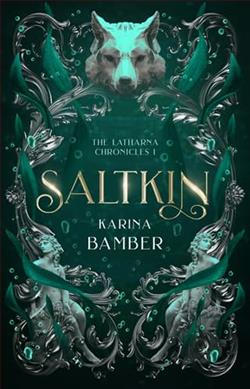
Karina Bamber's "Saltkin" is an evocative exploration of myth, family, and survival set against the haunting backdrop of Latharna. This fantasy novel deftly weaves together elements of folklore with the visceral realities of loss and resilience, creating a narrative that is as gripping as it is poignant. At its heart, "Saltkin" is a tale of a family grappling with the ghosts of their past while facing an imminent threat that could unravel the very fabric of their existence.
The novel opens with the return of the Selkie, mythical creatures that are both fascinating and fearsome. Their arrival signals the beginning of a war for Latharna, a conflict that is as much about territory as it is about survival. Bamber skillfully uses the Selkie as a metaphor for the untamed forces of nature and the unknown, setting the stage for a story that is rich in atmosphere and tension. The Selkie's return is not just a plot device but a catalyst that forces the characters to confront their deepest fears and hidden truths.
Central to "Saltkin" is the character of Archie Wolfenden, a grieving widower who embodies the struggle between duty and despair. As the last in a line of wolf-shifters, Archie is burdened with the responsibility of protecting the island, a task made all the more daunting by the personal tragedy that haunts him. Bamber's portrayal of Archie is both nuanced and empathetic; he is a man torn between the past and the present, his grief palpable yet never overwhelming the narrative. His journey is one of redemption and resilience, a testament to the enduring power of love and memory.
Ina, Archie's sister, provides a compelling counterpoint to his character. Her sharp-eyed determination and iron will make her a formidable presence in the story. Ina's refusal to succumb to myth or fear is a refreshing take on the archetypal warrior, and her relationship with Archie adds depth to the narrative. Bamber's depiction of sibling bonds is both realistic and touching, capturing the complexities of family dynamics with sensitivity and insight.
Malachi, Archie's teenage son, is another standout character in "Saltkin." His struggle with grief and the haunting nightmares that plague him add a layer of psychological depth to the story. Malachi's journey is one of self-discovery and acceptance, as he grapples with the burdens of his heritage and the expectations placed upon him. Bamber's exploration of Malachi's internal conflict is both poignant and relatable, capturing the universal themes of adolescence and identity with authenticity.
The writing style in "Saltkin" is both lyrical and immersive, drawing readers into the world of Latharna with vivid descriptions and evocative prose. Bamber's ability to blend the fantastical with the real is reminiscent of authors like Neil Gaiman and Susanna Clarke, where the boundaries between myth and reality are seamlessly blurred. The island itself becomes a character in its own right, its rugged beauty and hidden dangers mirroring the tumultuous journey of the Wolfendens.
Emotionally, "Saltkin" resonates on multiple levels. Bamber's exploration of grief and healing is handled with a deft touch, never descending into melodrama but instead offering a raw and honest portrayal of loss. The themes of family and legacy are interwoven throughout the narrative, providing a rich tapestry of emotion that is both heart-wrenching and hopeful. The novel's climax, while intense, is ultimately a testament to the strength of the human spirit and the enduring bonds of love.
In comparison to other works in the fantasy genre, "Saltkin" stands out for its character-driven narrative and emotional depth. While it shares thematic similarities with novels like "The Ocean at the End of the Lane" by Neil Gaiman, Bamber's focus on family and personal redemption gives it a unique voice. The novel's exploration of myth and reality, coupled with its richly drawn characters, makes it a compelling read for fans of both fantasy and literary fiction.
Overall, "Saltkin" by Karina Bamber is a beautifully crafted tale that lingers long after the final page is turned. Its exploration of myth, memory, and the enduring power of family makes it a standout in the fantasy genre. Bamber's ability to create a world that is both fantastical and deeply human is a testament to her skill as a storyteller. For readers seeking a novel that is both thought-provoking and emotionally resonant, "Saltkin" is a journey worth taking.



