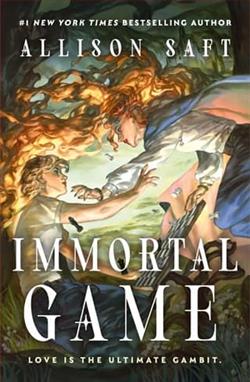
Allison Saft's "Immortal Game" is an enthralling addition to the romantic fantasy genre, weaving together elements of magic, rivalry, and the timeless allure of chess into a narrative that captivates from the first page. The novel's protagonist, Shea Fury, is a chess grandmaster whose life takes a dramatic turn when she receives an invitation to a chess tournament in the Otherworld, a realm ruled by the enigmatic High King of the fae. This tournament offers more than just the prestige of victory; it promises the winner a single wish, a chance for Shea to rescue her sister, who was taken by the High King six years prior.
Saft's writing style is both lush and precise, painting vivid images of the Otherworld while maintaining a tight focus on the emotional core of the story. The world-building is intricate, with the Otherworld depicted as a place of both beauty and danger, where dark magic lurks and every move can have dire consequences. The Iron Veil that separates the human world from the fae adds a layer of tension, emphasizing the stakes involved in Shea's quest.
The character development in "Immortal Game" is particularly noteworthy. Shea Fury is a complex protagonist, driven by her love for her sister and her determination to succeed in a world that is often hostile to her ambitions. Her journey is not just a physical one but also an emotional odyssey, as she grapples with the moral ambiguities of her quest and the alliances she must form. Her relationship with Ciara of Bri Leith, a fae princess and her longtime rival, adds depth to the narrative. Ciara is a sharply drawn character, whose motivations and loyalties are as enigmatic as the Otherworld itself. The dynamic between Shea and Ciara is charged with tension and unexpected camaraderie, reminiscent of the intricate character relationships found in works by authors like Sarah J. Maas and Holly Black.
One of the major themes of "Immortal Game" is the exploration of sacrifice and the lengths one will go to for love. Shea's determination to save her sister at any cost raises questions about the nature of sacrifice and the ethical boundaries one might cross in pursuit of a noble goal. This theme is expertly woven into the fabric of the story, challenging readers to consider what they would be willing to sacrifice for those they love.
The chess tournament itself serves as a powerful metaphor for the strategic and often perilous decisions Shea must make. Each move in the tournament mirrors the larger game she is playing in the Otherworld, where alliances are as fragile as the pieces on a chessboard. Saft's use of chess as a narrative device is both clever and effective, adding layers of meaning to the plot and highlighting Shea's analytical mind and strategic prowess.
Emotionally, "Immortal Game" is a rollercoaster, with moments of intense suspense, heartache, and triumph. Saft's ability to evoke emotion is one of the novel's greatest strengths, drawing readers into Shea's world and making them feel every victory and setback as if it were their own. The stakes are high, and the emotional impact is profound, leaving readers both satisfied and eager for more.
In comparison to other works in the romantic fantasy genre, "Immortal Game" stands out for its unique blend of chess and fantasy, as well as its strong character development and thematic depth. Fans of Leigh Bardugo and Cassandra Clare will find much to admire in Saft's storytelling, which combines the best elements of fantasy with a compelling romantic subplot.
Overall, "Immortal Game" by Allison Saft is a masterful blend of fantasy, romance, and strategy, offering readers a richly imagined world and a story that resonates on multiple levels. Its exploration of love, sacrifice, and the complexities of human (and fae) relationships makes it a must-read for fans of the genre. Saft has crafted a tale that is both timeless and timely, ensuring that "Immortal Game" will remain a favorite among readers for years to come.



