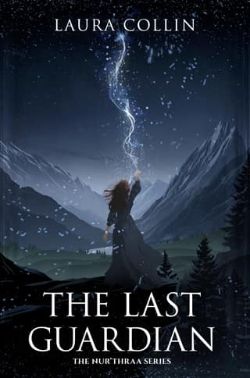
Laura Collin's The Last Guardian is a captivating fantasy novel that delves into the complexities of memory, identity, and the quest for truth. Set in a realm where magic has been systematically erased, the story follows Alyana, a protagonist grappling with amnesia and a mysterious past. The novel opens with Alyana's struggle to piece together her life after a traumatic event left her with no memories, only questions and a haunting sense of loss. This premise sets the stage for a gripping narrative that intertwines personal discovery with a larger, empire-shaking quest.
One of the major themes in The Last Guardian is the search for identity in a world built on deception. Alyana's journey is as much about uncovering the truth of her own past as it is about challenging the lies that underpin the Empire. The appearance of a strange mark on her skin acts as a catalyst, propelling her into a world of danger and intrigue. This mark, a symbol of the old magic, serves as a powerful metaphor for hidden truths and suppressed histories. Collin expertly uses this motif to explore how personal and collective histories are intertwined, and how uncovering one can illuminate the other.
Character development is a standout feature in Collin's work. Alyana is a richly drawn character whose internal conflicts are as compelling as the external threats she faces. Her evolution from a confused and isolated young woman into a determined seeker of truth is both believable and inspiring. The mysterious stranger she encounters, who shares her mark, adds depth to the narrative. His enigmatic presence and the chemistry between him and Alyana create a dynamic that keeps readers engaged. Their partnership is reminiscent of classic fantasy duos, yet Collin infuses it with a fresh energy that feels both modern and timeless.
The writing style in The Last Guardian is both lyrical and precise, striking a balance that enhances the novel's emotional impact. Collin's prose is evocative, painting vivid pictures of the landscapes and cultures Alyana encounters. Her ability to convey the tension and urgency of Alyana's quest is matched by her skill in depicting the quieter, introspective moments that give the story its emotional depth. The dialogue is sharp and often laced with wit, providing moments of levity that contrast with the darker themes.
Emotionally, the novel resonates on multiple levels. Alyana's personal journey is deeply moving, as she confronts the possibility that the truth she seeks could be more devastating than the lies she has lived with. The stakes are high, not just for her, but for the entire realm, and Collin does an excellent job of conveying the weight of these stakes without losing sight of the personal. The tension between personal and political, between past and present, is handled with nuance, making the reader care deeply about the outcome.
In terms of genre, The Last Guardian stands alongside works by authors like Leigh Bardugo and Sarah J. Maas, who also blend intricate world-building with strong character arcs and themes of power and identity. However, Collin's novel distinguishes itself with its focus on memory and the ways in which personal history can be as much a battleground as any physical realm. This thematic focus gives the novel a unique flavor, appealing to readers who enjoy fantasy with a psychological edge.
Overall, The Last Guardian is a compelling addition to the fantasy genre, offering a richly imagined world and a protagonist whose journey is both epic and intimately personal. Laura Collin has crafted a story that is as much about the power of truth as it is about the magic of storytelling itself. For readers seeking a fantasy novel that combines adventure with emotional depth, The Last Guardian is a must-read. Its exploration of identity, memory, and the nature of truth will linger long after the final page is turned, making it a standout in contemporary fantasy literature.



