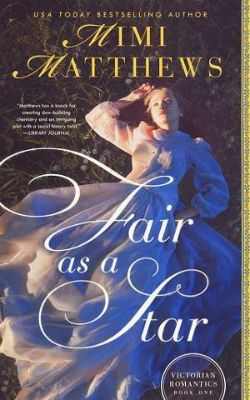
Mimi Matthews' novel, Fair as a Star, is a captivating exploration of love, duty, and personal struggle set against the backdrop of a quaint Victorian English village. This historical romance deftly intertwines themes of societal expectation and personal longing, creating a narrative that is both engaging and emotionally resonant. Matthews, known for her meticulous attention to historical detail and nuanced character portrayals, delivers a story that feels both timeless and deeply rooted in its period.
At the heart of Fair as a Star is Beryl Burnham, a character whose internal conflicts drive much of the novel's emotional depth. Beryl returns to Shepton Worthy after a mysterious stay in Paris, ostensibly ready to resume her life and fulfill her engagement to Sir Henry Rivenhall. However, beneath the surface of her seemingly perfect life lies a profound sense of unease and dissatisfaction. Matthews skillfully portrays Beryl's struggle with depression, a topic that is rarely addressed in historical romance, with sensitivity and authenticity. This adds a layer of complexity to Beryl's character, making her journey towards self-acceptance and happiness all the more compelling.
In contrast to Beryl's internal turmoil is Mark Rivenhall, the village curate and Sir Henry's younger brother. Mark is characterized by his compassionate nature and deep understanding, qualities that make him an ideal confidant for Beryl. His longstanding, unrequited love for her adds a poignant dimension to the narrative. Matthews excels in depicting Mark's quiet strength and integrity, making him a standout character whose emotional journey is as significant as Beryl's. The dynamic between Beryl and Mark is beautifully rendered, with their interactions filled with unspoken emotions and subtle tension.
The novel's setting in a Victorian village is vividly brought to life through Matthews' evocative prose. Her attention to detail in describing the social customs and daily life of the period enhances the authenticity of the story. The idyllic summer in Shepton Worthy serves as a stark contrast to the emotional storms brewing within the characters, highlighting the tension between societal expectations and personal desires. This setting also provides a rich tapestry against which the characters' relationships and personal growth unfold.
Matthews' writing style in Fair as a Star is both elegant and accessible, drawing readers into the world she has created with ease. Her ability to balance historical accuracy with engaging storytelling is reminiscent of authors like Georgette Heyer and Mary Balogh, who are known for their contributions to the historical romance genre. Matthews' prose is imbued with a sense of warmth and empathy, making the emotional journeys of her characters feel deeply personal and relatable.
The emotional impact of Fair as a Star is significant, as Matthews tackles themes of mental health, love, and duty with grace and sensitivity. Beryl's struggle with depression is portrayed with a realism that is both heartbreaking and hopeful, offering a nuanced perspective on a condition that is often misunderstood. The novel also explores the complexities of love, particularly the tension between societal obligations and personal desires. This is exemplified in the love triangle between Beryl, Sir Henry, and Mark, which is handled with a deft touch that avoids melodrama in favor of genuine emotional depth.
In conclusion, Fair as a Star by Mimi Matthews is a beautifully crafted historical romance that offers a thoughtful exploration of love, duty, and personal struggle. The novel's richly drawn characters, evocative setting, and emotionally resonant themes make it a standout in the genre. Matthews' ability to weave historical detail with compelling storytelling ensures that readers are not only entertained but also moved by the journey of her characters. For fans of historical romance, Fair as a Star is a must-read that promises to linger in the mind long after the final page is turned.



