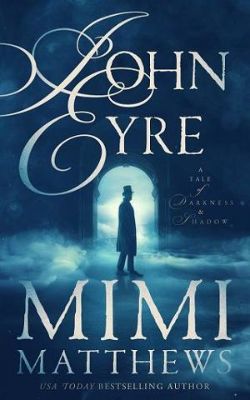
Mimi Matthews' John Eyre is a captivating reimagining of Charlotte Brontë’s classic, Jane Eyre, infused with a supernatural twist that breathes new life into the Victorian gothic genre. Set in the eerie landscape of Yorkshire in 1843, Matthews crafts a world where the familiar meets the fantastical, creating a narrative that is both haunting and deeply engaging.
The novel opens with John Eyre, a disgraced former schoolmaster, arriving at Thornfield Hall. His new role as a tutor to two peculiar boys introduces him to an environment steeped in mystery and shadow. Matthews skillfully uses the setting to enhance the gothic atmosphere, with descriptions of the ever-present silver mist and the strange noises that punctuate the night, creating a palpable sense of unease. This atmospheric tension is reminiscent of classic gothic literature, drawing comparisons to works by authors like Mary Shelley and Bram Stoker.
At the heart of John Eyre is the enigmatic Bertha Mason, whose character is explored with depth and nuance. Unlike in Brontë’s original, where Bertha is often sidelined, Matthews gives her a voice through letters and journal entries. This narrative choice allows readers to delve into Bertha's psyche, witnessing her transformation from a spirited heiress to a woman grappling with the dark secrets of her marriage to Edward Rochester. The dual narrative structure, alternating between John’s present and Bertha’s past, enriches the story, offering insights into both characters’ struggles and desires.
Matthews' writing style is both elegant and evocative, capturing the essence of the Victorian era while adding her unique flair. Her prose is richly descriptive, painting vivid images of the moors and the imposing Thornfield Hall. The dialogue is period-appropriate, yet accessible, ensuring that the historical setting feels authentic without alienating modern readers. This balance is crucial in a retelling, and Matthews achieves it with aplomb, making the novel appealing to fans of historical fiction and gothic romance alike.
One of the major themes in John Eyre is the exploration of identity and self-discovery. Both John and Bertha are on journeys of personal growth, confronting their pasts and the societal expectations placed upon them. John’s character development is particularly compelling; his initial disgrace and subsequent redemption arc are handled with sensitivity and depth. As he uncovers the mysteries of Thornfield Hall, he also discovers his own strength and resilience, making him a protagonist readers can root for.
In contrast, Bertha’s journey is one of empowerment and liberation. Her realization that Edward Rochester is not who he seems is a powerful commentary on the themes of deception and autonomy. Matthews uses Bertha’s story to challenge the traditional damsel-in-distress trope, instead portraying her as a woman who takes control of her destiny, even in the face of supernatural forces. This feminist undertone adds a modern twist to the gothic narrative, aligning it with contemporary discussions on gender and power.
The supernatural elements in John Eyre are woven seamlessly into the plot, enhancing the gothic atmosphere without overshadowing the character-driven story. The presence of strange creatures and the sinister mist serve as metaphors for the internal and external battles faced by the characters. Matthews uses these elements to explore the eternal struggle between light and darkness, both literally and metaphorically. This thematic depth adds layers to the narrative, inviting readers to ponder the nature of evil and redemption.
Emotionally, John Eyre is a rollercoaster, with moments of tension, fear, and ultimately, hope. Matthews excels at building suspense, keeping readers on the edge of their seats as the mysteries of Thornfield Hall unravel. The emotional impact is heightened by the well-drawn characters, whose personal stakes are intricately tied to the supernatural occurrences. The novel’s climax is both satisfying and thought-provoking, leaving readers with much to contemplate long after the final page is turned.
In conclusion, Mimi Matthews' John Eyre is a masterful blend of gothic romance and supernatural intrigue. By reimagining a beloved classic through a fresh lens, Matthews offers a story that is both familiar and innovative. Her skillful character development, atmospheric writing, and exploration of timeless themes make this novel a must-read for fans of the genre. Whether you are a devotee of Brontë’s original or new to the world of Victorian gothic fiction, John Eyre promises an unforgettable reading experience that lingers in the mind and heart.



