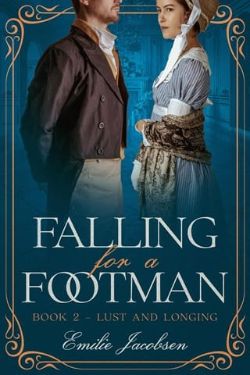
Emilie Jacobsen's "Falling for a Footman" is a captivating addition to the Regency Romance genre, offering readers a delightful blend of mystery, romance, and the social intricacies of the era. As the second book in the "Lust and Longing" series, it stands out with its engaging narrative and well-crafted characters, making it a must-read for fans of historical romance.
The story centers around Charlotte, the eldest daughter of a duke, who returns to her family's country estate after an uninspiring season in London. Her encounter with James, the new footman, sparks an unexpected attraction that challenges societal norms and personal expectations. Jacobsen skillfully explores the theme of forbidden love, a staple in Regency romances, by placing Charlotte in a dilemma between her feelings and her family's honor. The tension is heightened by the suspicion that James might be involved in thefts occurring within the estate, adding a layer of intrigue to the romantic plot.
James, on the other hand, is not just a footman but a Bow Street Runner on his first undercover assignment. His character is a refreshing take on the classic romantic hero, blending the allure of a mysterious past with the vulnerability of a man torn between duty and desire. Jacobsen's portrayal of James is nuanced, capturing the internal conflict of a man who must balance his professional obligations with his growing affection for Charlotte. This duality in his character adds depth to the narrative, making his journey compelling and relatable.
The character development in "Falling for a Footman" is one of its strongest aspects. Charlotte evolves from a young woman disillusioned by the superficiality of London society to someone who learns to trust her instincts and follow her heart. Her growth is mirrored by James, who learns to reconcile his professional ambitions with his personal desires. Together, their journey is one of self-discovery and empowerment, themes that resonate well with modern readers despite the historical setting.
Jacobsen's writing style is both elegant and accessible, capturing the essence of the Regency era while maintaining a modern sensibility that appeals to contemporary audiences. Her descriptions of the setting are vivid, transporting readers to the opulent yet restrictive world of early 19th-century England. The dialogue is sharp and witty, reminiscent of the works of Jane Austen, yet infused with a steamy undercurrent that sets it apart from traditional Regency romances.
The emotional impact of "Falling for a Footman" is profound, as Jacobsen deftly balances romance with suspense. The chemistry between Charlotte and James is palpable, and their interactions are charged with a tension that keeps readers invested in their story. The stakes are high, not just because of the potential scandal but also due to the personal growth each character must undergo to achieve their happy ending. This emotional depth is what elevates the novella from a simple love story to a rich exploration of love, trust, and identity.
In comparison to other works in the genre, Jacobsen's novella stands out for its unique blend of romance and mystery. While it shares thematic similarities with the works of Georgette Heyer and Julia Quinn, "Falling for a Footman" distinguishes itself with its focus on the protagonist's internal struggles and the societal constraints they must navigate. The inclusion of a mystery subplot adds an engaging twist, reminiscent of Amanda Quick's historical romances, which often feature strong heroines and suspenseful plots.
Overall, "Falling for a Footman" by Emilie Jacobsen is a delightful read for anyone who enjoys Regency romances with a twist. Its well-developed characters, engaging plot, and emotional depth make it a standout in the genre. Whether you're a long-time fan of historical romance or new to the genre, this novella offers a satisfying blend of love, intrigue, and personal growth, ensuring a memorable reading experience.



