The Great Dane blinked once—slowly, regally—then resumed her nap.
Darcy hated shopping. He loathed the jostle of Oxford Street, the relentless manufactured cheer of shop displays, the armies of harassed assistants trying to spritz perfume on unsuspecting passers-by. The crowds moved like sheep, clustering around sales displays and blocking thoroughfares with the same inefficiency as London roadworks.
Normally he solved such matters with a credit card and the Internet, occasionally supplemented by his assistant’s impeccable taste and discretion. But for Elizabeth, he felt he ought to make the effort. Personal reconnaissance, as it were.
That had been hisfirst mistake.




The second was choosing a Saturday in early December.
The car dropped him on Bond Street just as a light drizzle began. He opened his umbrella and squared his shoulders like a soldier heading into the Somme.
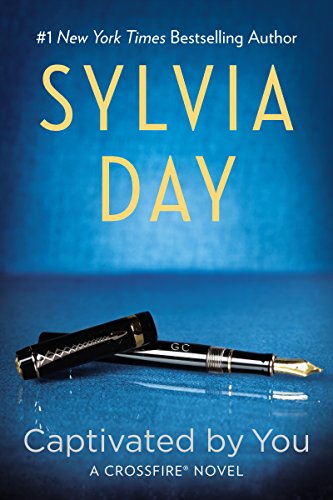
Montblanc was first on his mental list, partly for geographical convenience and partly because fountain pens implied serious intentions without venturing into jewellery territory. Inside, the shop gleamed with black lacquer and glass. The silence was almost ecclesiastical.
A bright-eyed assistant glided forward with a suave eagerness.
“Good morning, sir. Something special today? A present, perhaps?”
“I’m considering options,” Darcy told him.
He was shown an array of fountain pens that progressed from merely expensive to eye-wateringly precious. Gold nibs engraved with tiny masterpieces, enamel barrels depicting Chinese dragons, limited editions commemorating dead composers. Each came with its own silk-lined box and a story about craftsmanship stretching back generations.
“This one,” the assistant produced a pen that seemed to glow with inner light, “is part of our Writers Edition series. Only 1,882 pieces worldwide, sir. The number represents the year Virginia Woolf was born.”
Elizabeth loved Virginia Woolf. Of course, she had many favourite authors.
Darcy examined the pen. It was exquisite, a work of art that happened to hold ink. The sort of pen with which one might sign important documents or, at the very least, write terribly significant letters.
But Elizabeth’s desk, as far as he could tell from his casual observations, was a cheerful mosaic of Post-it notes, half-filled mugs that left coffee rings, and tufts of Waffles’s golden fur over everything. She wrote notes with whatever came to hand—pads of paper filched from hotel rooms, pencils chewed to stumps, occasionally one of those dreadful four-colour biroswith the black, blue, red, and green ink and the little plastic sliders down the side. She was forever clicking them in and out while she thought. The noise drove him mad, but she claimed it helped with her creative process.
She would lose a Montblanc within a fortnight. Probably use it to prop open a window.
“I’ll need to consider it,” he murmured, setting the pen down with appropriate reverence.
The assistant’s smile flickered briefly, long enough for Darcy to understand that £1,200 for a pen was, in the man's professional opinion, entirely reasonable.
Darcy made his escape before anyone could mention heritage collections or bespoke engraving services.
The Christmas department at Harrods was a different sort of trial. Darcy endured the mountains of artificial snow, the forests of mechanized reindeer, and enough tinsel to blind, only to be abruptly presented with a crystal decanter that caught the light like captured sunlight.
“Waterford,” the assistant breathed, as though invoking the name of a deity. “Hand-cut, sir. Each piece takes fourteen hours to complete.”
It was handsome, stately, the something one might inherit from a great-uncle along with a secondary property in Wales. The crystal sang when touched, a pure note that spoke of Sunday afternoon sherries and generations of good breeding.
But Elizabeth? The woman who drank supermarket prosecco with an unrepentant grin? Even she drew the line at wine in a box but a decanter, no matter how beautiful, would only sit in her flat gathering dust.




He muttered something diplomatic about needing to measure shelf space and beat a strategic retreat past a display of plastic dancing Christmas trees.
The entire shopping experience this time of year was designed to induce lunacy.
The last straw came at Cartier. When he mentioned Elizabeth worked from home, the assistant produced a desk clock that was less timepiece than sculpture: slim, elegant, a marriage of form and function appropriate for the desk of a head of state.
“The mechanism is Swiss,” he explained, as though this explained everything. “Guaranteed accurate to within two seconds per month.”
Darcy studied it, thinking that Elizabeth might appreciate its clean lines, its refusal to apologize for its own elegance. But she used her phone to tell her the time.
She would laugh at him for giving her a clock.
He returned the item with thanks, no closer to finding the right present than when he started. He headed for the door—then froze when he spied two familiar figures.