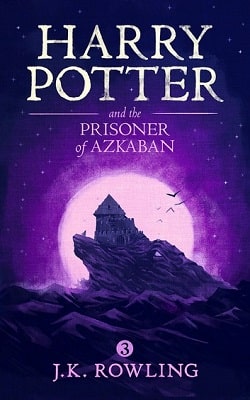
She pulled back as if she’d touched something hot, turning immediately to the register and pressing buttons that didn’t need pressing. “Sorry,” she murmured, not looking up.
“For what?”
“I—” She shook her head. “Nothing. Just?—”
She didn’t finish, and I didn’t push, because if I pushed, I wasn’t entirely sure what would come out of my mouth, and this didn’t feel like the moment for it. I tucked the book under my arm and let the silence sit there between us, warm and unresolved.




“See you around, Cara.”
She glanced up. A smile ghosted across her face—there and gone. “See you,” she said.
I walked out into the afternoon and stood on the sidewalk for a moment before I moved, the book under my arm and the receipt still in my hand, and thought about how fourteen years of distance had apparently done very little to solve the fundamental problem of Cara Darlington.
Once on the sidewalk, I didn’t move right away. The glass caught the light at an angle, reflection cutting across the window so I could only see pieces of the shop inside. A shelf. A flicker of movement. The edge of the counter.
I adjusted the book under my arm and headed toward my truck, Cara still in the back of my mind. I hadn’t planned on coming in. Now I was already planning on coming back. And that felt like something I should probably think harder about.
My phone lit up on the passenger seat as I pulled out of the spot, the screen flashing bright in the dim cab. I glanced at it at the next stop sign, thumb hovering just long enough to read the name before I turned it face down again.
Emmett Harrington: Haven’t heard from you in a while. Got something that might interest you. Call me.
I sat there a second longer than I needed to, the engine idling, the bookstore still visible in the rearview mirror. Then I eased my foot off the brake and drove, leaving the message unanswered.
Chapter 5
Cara
Icame down the narrow staircase from my apartment just after eight, the familiar creak of the steps sounding beneath my feet. The shop waited at the bottom, lights still off, windows catching the early morning sun.
I still had a little time before opening—that soft pocket of morning I guarded carefully. Enough for a cup of tea, a walk—usually with my grandma—and one last pass through my list.
I paused at the front window. Honeybrook Hollow was already moving. A couple walked by with coffee cups in hand, the bakery lights flicked on across the street, and through the wide front window, I spotted Piper behind the counter, already in motion. She glanced up, caught sight of me, and lifted a hand in a cheerful wave. I smiled and waved back, warmth settling in my chest as she disappeared into the back.
Mystery Night hovered at the edge of everything. I scanned the shop, mentally ticking off my list. Tables would need to be moved. Chairs pulled from the back. Clue envelopes restocked and labeled—again, since I’d already redone them twice. The sign in the window caught the light as I turned back toward the counter, and my stomach flipped, equal parts excitement and dread.
This was my idea. That fact alone made it heavier.
I moved toward the mystery section and straightened a stack that didn’t need it, aligning spines that were already neat. I liked order. It made things feel manageable—if I could make everything look right, then it wouldberight. That was how it worked. Usually.
I reached for the kettle and set it on to boil, the quiet click grounding me as I went back to the counter and opened my planner. Notes crowded the margins—times, reminders, little stars next to things I was pretending weren’t making me nervous. It was going to be fine, I told myself. It was just a Mystery Night. Cozy and small, exactly the kind of thing Pine & Pages was meant for, exactly how my great-grandmother had intended this place to be.
Mystery Night wasn’t really about mysteries, not at its core. It was about books—and the special, hopeful way they brought people together when you gave them the chance. I wanted people to feel welcome enough to wander the shelves, to talk about what they loved, to stay longer than they planned. I wanted Pine & Pages to feel the way it had when my great-grandmother ran it, then after her, my grandfather—not just a bookstore, but a place where something small and good always seemed to be happening. A place to escape into when life got hard.
I’d grown up watching my grandpa recommend books as if he were sharing secrets. Never flashy, never loud. He remembered what people liked. He asked questions. He made reading feel social without making anyone feel put on the spot. I’d inherited the love of books easily enough. The ease, the confidence—that part didn’t come as naturally, but I was determined to try harder.




Mystery Night felt like a way to be like him. A way to invite people in without having to stand in front of them and talk aboutmyself. Books could do the heavy lifting. I could set the scene, guide the experience, and let the stories give people something to hold on to while I worked up the courage to take up a little more space of my own.
I spread the materials out in front of me—clue envelopes stacked neatly, bookmarks fanned beside them, a handwritten outline I’d revised so many times the paper was starting to soften at the edges. I reread the opening paragraph, tweaking a word here and there, even though I knew it worked. It had to work.
I moved through the shop, testing the flow the way I would on the night itself. If people gathered near the front first, then split into groups—if the clues led them toward the back shelves—if the final reveal happened near the counter, where everyone could hear?—
The kettle clicked off. I welcomed the interruption.
I poured the water and watched the tea darken as it steeped, relaxing into the familiar routine. Steam curled toward the ceiling, warm and steady. I was just lining up the clue envelopes for the third time when a sharp tap sounded against the front window.
My Grandma Mabel stood outside, waving enthusiastically. I smiled before I even reached the door.
“Cara,” she announced as I unlocked it, like she was stepping onto a stage. “I’ve come to rescue you.”