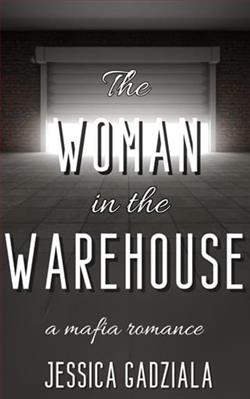
Jessica Gadziala’s "The Woman in the Warehouse" harnesses the gritty ambiance of a noir thriller while embedding a profound exploration of identity and survival. From the opening page, Gadziala crafts a story that is as much a psychological foray as it is a gripping mystery, hooking readers with its richly dark narrative textures and complex characterizations.
Set against the backdrop of a seemingly unremarkable warehouse, the novel introduces us to Vee, the protagonist, whose job at the storage facility is everything but mundane. The warehouse, depicted with palpable vividness, almost breathes with foreboding, creating an atmospheric setting that becomes a character in its own right. Gadziala excels in setting scenes where the dim lighting and endless corridors mimic the labyrinthine recesses of Vee’s own tangled psyche.
The narrative unfolds as Vee stumbles across a mysterious crate that should not have been there. Her discovery triggers a series of events that spiral beyond her control, entangling her in a web of deceit, danger, and betrayal. The crate, as it turns out, contains clues to a hidden past that directly ties to Vee’s forgotten and traumatic beginnings. As she delves deeper, the stakes rise, not just materialistically but existentially.
Vee is written with a complexity that invites both sympathy and critical reflection. Gadziala imbues her with a resilience that borders on the stoic, yet Vee’s vulnerabilities are palpable and humanizing. Her loneliness and quest for personal clarity are thematic undercurrents that drive much of the internal conflict within the tale. It is through her interactions with secondary characters—each deftly created with distinctive voices and believable motivations—that Vee’s personal journey gains depth and a resonating emotional impact.
One of the most compelling aspects of the story is Gadziala’s use of the first-person narrative. Vee’s voice is distinctive—tough yet introspective, raw yet articulate. This choice of narrative perspective ensures the reader is not merely an observer but a confidante. We access her thoughts, her doubts, her rationalizations, which facilitates a deeper engagement with her challenges and her ultimate transformations. This immediacy is one of the novel's strengths, pulling the reader into a vortex of empathy and intrigue.
The plot itself is tightly woven, with twists that are unexpected yet plausible. Gadziala respects the intelligence of her readers by crafting a mystery where the clues are subtly laid yet effective, the revelations timed to perfection to maintain suspense. The pacing is impeccable; just as one piece of the puzzle finds its place, another complication arises, keeping the tension taut and the pages turning.
Moreover, the narrative smartly incorporates themes of identity reconstruction, memory, and redemption without allowing them to overwhelm the primary suspense. The psychological depth added by these themes enriches the narrative, offering layers of meaning that invite analysis and discussion. The interplay between memory and identity, explored through Vee’s gradual unravelling of her past, is handled with both sensitivity and a stark acknowledgment of trauma's long-standing impacts.
However, it’s not just the lead and the thematic pursuits that standout. The dialogues are crisp, authentic, and charged with implication. Dialogue often drives the narrative forward, revealing character traits, historical biases, and interpersonal dynamics without resortive to exposition-heavy passages. Gadziala’s control over vernacular speech, especially, adds authenticity and texture to the interactions.
Critically, while the novel is steeped in elements typical of the thriller genre, it avoids clichés. Its fresh take on the psychological impacts of a suspense-driven plot sets it apart. The resolution of the mystery is both satisfying and thought-provoking, leaving the reader to ponder the true implications of unravelling one’s past and the paths one chooses thereafter.
In conclusion, "The Woman in the Warehouse" by Jessica Gadziala is a compelling blend of thriller and psychological exploration. With its deep dive into the darkness of a disturbed past and the quest for identity, set against a high-stakes narrative of mystery and suspense, the novel is a well-crafted, engaging, and thoughtful read. It stands not only as a testament to Gadziala’s prowess in storytelling but also as an invitation to readers to contemplate the shadows that define our own existences. It’s a potent, wrenching, yet ultimately cathartic journey that should not be missed by fans of the genre looking for substance in addition to suspense.