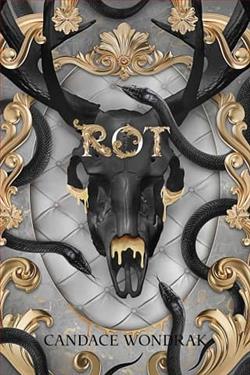
Rot by Candace Wondrak is a novel that promises an intriguing blend of horror and speculative fiction, but unfortunately, it falls short in delivering a truly captivating story. Wondrak’s ambition is clear, and her premise is compelling at its core, dealing with themes of decay, both physical and moral. However, the execution leaves much to be desired, with issues in character development, pacing, and overall impact pulling down what could potentially be a powerful narrative.
The novel is set in a dystopian world where society has crumbled, and the survivors are left to navigate the consequences of a mysterious illness that causes both physical and psychological decomposition. The protagonist, Elara, is a young woman caught in the midst of this chaos, trying to survive and make sense of the deteriorating world around her. The concept of ‘rot’—not just as a physical ailment but as a pervasive societal blight—is a compelling metaphor and could have been the cornerstone of a deeply insightful commentary on the human condition.
However, the development of this metaphor throughout the book is often inconsistent and muddled. Wondrak takes a bold approach by using a fragmented narrative style, intending to mirror the disintegration of society and the human body witnessed by the characters. While such an approach can be effective, here it often leads to a confusing and disjointed reading experience. The timeline jumps erratically, and without sufficient anchoring in either the plot or character development, the reader is left feeling disoriented rather than enlightened.
The characterization in Rot struggles under the weight of the novel’s lofty themes. Elara, for example, is intended to be a complex character whose resilience and moral ambiguity mirror the rot affecting her world. Yet, her motivations remain unclear and her emotional responses often feel incongruent with the events that unfold. The secondary characters fare no better, often feeling like mere sketches or devices used to propel the plot forward without much depth or believable interaction.
The prose itself vacillates between strikingly vivid descriptions and cumbersome passages that stifle any building tension or horror. Wondrak clearly has a knack for visceral, impactful moments—her descriptions of the grotesque transformations caused by the rotting disease are both horrifying and mesmerizing. Yet these moments are often lost in a sea of overly complex sentences and metaphors that feel forced, detracting from the urgency and clarity that a novel of this genre demands.
One of the larger issues with Rot is its pacing. The novel has an uneven tempo, with long stretches where very little happens, punctuated by bursts of action that seem too sudden or unearned. This erratic pacing makes it difficult to remain engaged or invested in the story’s outcome. The climax of the story, intended to be a shocking twist, feels both predictable and underwhelming, given the build-up that precedes it.
Despite its shortcomings, Rot is not without merit. The dark atmosphere that Wondrak conjures is genuinely unsettling, and the setting of a decaying civilization is crafted with a palpable sense of despair and decay. These elements of the novel, had they been supported by a stronger narrative and deeper characters, might have contributed to a powerful reading experience. Moreover, for all the critique of its style and structure, the book does provoke thought about societal disintegration and the nature of humanity when faced with existential threats—Ideas that linger after the final page is turned.
In conclusion, Rot by Candace Wondrak showcases a potentially gripping scenario hampered by significant flaws in execution. Readers who can overlook disjointed narratives and underdeveloped characters may find themselves intrigued by the novel’s exploration of decay and destruction. However, for those seeking a more cohesive and impactful exploration of similar themes, the book might not meet expectations. Wondrak’s bold vision is evident throughout, but the delivery does not consistently match the ambition, resulting in a novel that feels like an unfinished sketch rather than a fully realized portrait of a society, and humanity, in rot.



