Page 14
Ophelia took a deep breath. “That was pleasant,” she said, willing her cheeks to stop burning.
“I found it so,” His Grace said amiably.
The smile playing on his lips made her want to scowl at him, but that would be too revealing. “If you would please take your leave—”
As the words left her mouth, she realized that her carriage was swaying back and forth, presumably on its way to her house.




“Your coachman couldn’t block the street, so when I didn’t leave the carriage immediately, he set out.”
Ophelia did scowl. “Don’t read my thoughts. I don’t like it.”
The duke’s laugh was husky, joyful in a masculine way.
“When we reach my house, Bisquet can return you to the ball,” Ophelia said, noticing that the duke had a dimple. A dimple! In that strong face it was like a private jest.
He was so much a duke. It was easy to imagine him bowing before the king in snowy stockings and a powdered wig. She could picture him addressing the House of Lords, or stepping out of his ornate carriage, or doing other ducal things.
But a little dimple? A husky chuckle? Dukes weren’t supposed to have those—nor the mischievous look in his eyes. Not that either.
They weren’t supposed to kneel before plump widows of no particular status. The notion made her feel suddenly vulnerable. It was so tempting to imagine throwing away the propriety, the rules, that had governed her entire life.
No.
Viola’s reputation was tied to her own. She couldn’t have an affaire with a duke no matter how alluring his kisses, and she didn’t wish to marry him. Time to get rid of him.
“It’s been very nice to talk to you,” she said, “but there is nowhere . . .” She stumbled to a halt. “I do not wish to know you further.”
“Not at all?”
She couldn’t read his eyes, but that couldn’t have been a flash of vulnerability—could it?
Or was it certainty: that’s what she saw most clearly. A kind of deep, knowing certainty shining from his eyes. As if he knew something about her that she didn’t.
“No,” she said sharply. “My life is very pleasant. I do not wish to be a duchess. I certainly do not wish to mother six more children.”
“Eight.”
“Eight!” She felt indignation rising up her spine. “No one should have so many children.”




He cocked his head. “The world does seem too small for the number of the bawling, squalling Wildes I have dropped into it. I apologize.”
“You should not marry again,” she said, less severely. “What if you had even more?”
The lines of his face were sharp, almost fierce, and yet they softened into a smile and that dimple appeared again. “I told my twin sister as much.”
Ophelia stared at him in fascination. “You have a sister?” It was hard to imagine a female version of him.
He nodded. “Louisa.”
The carriage was silent except for the rising whine of wind. As if gravel was thrown at the glass, a flurry of snow hit the windows.
He pulled back a flap of her silk curtains. “That came on fast.”
“Has it turned into a snowstorm?” Ophelia frowned and plucked open the curtain at her side. In the light cast by the torches attached to the sides of her carriage, snow swirled thick and glossy. The fairy tale–like fluff that she had glimpsed over the duke’s shoulder when he first joined her had turned into a howling dervish. The carriage was progressing at a crawl.
“Bisquet was concerned about snow,” she confessed. “I don’t live far from Lady Gryffyn’s house, though, just on the other side of Hyde Park.”
“In my experience, coachmen generally favor staying tucked up in a warm stable feeding their horses hot mash and themselves a hot toddy.” The duke dropped the curtain.
Continue exploring
The Silver Fox’s Naughty List

Bleu Belle’s Naughty Desire
Sheltered By the Mountain Man
Challenged By the Next-Door Veteran

All Tied Up with the Naughty Mountain Man
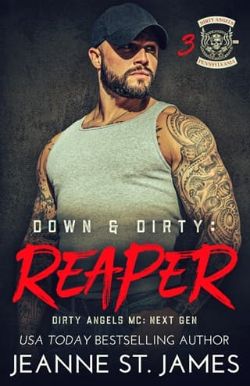
Down & Dirty: Reaper
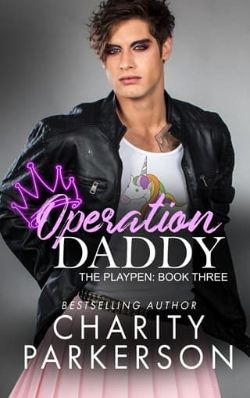
Operation Daddy
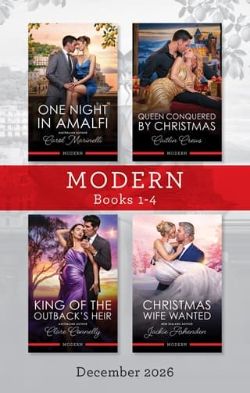
Modern Romance December 2026 Books 1-4

Big Package
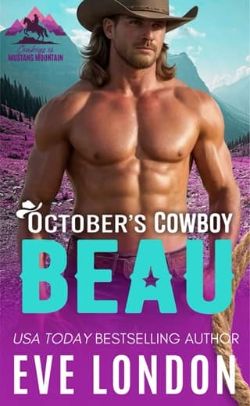
October’s Cowboy Beau

Better than Famous